

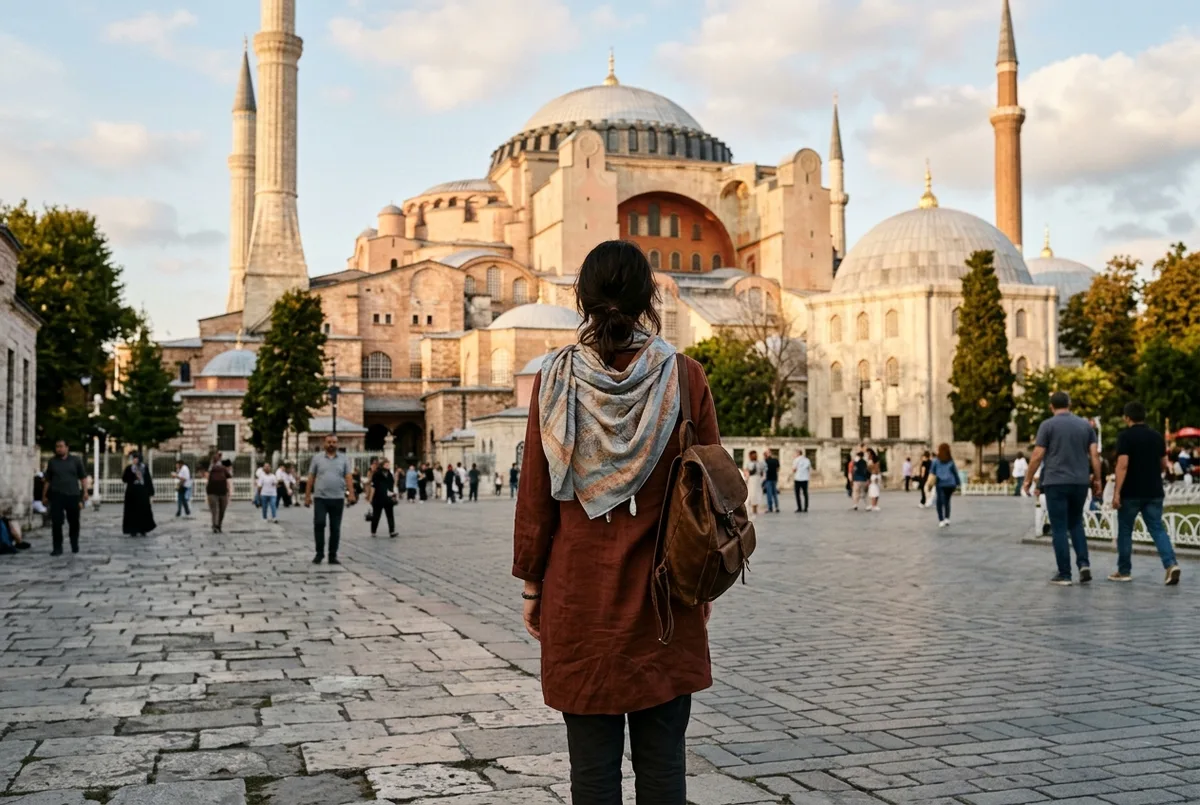
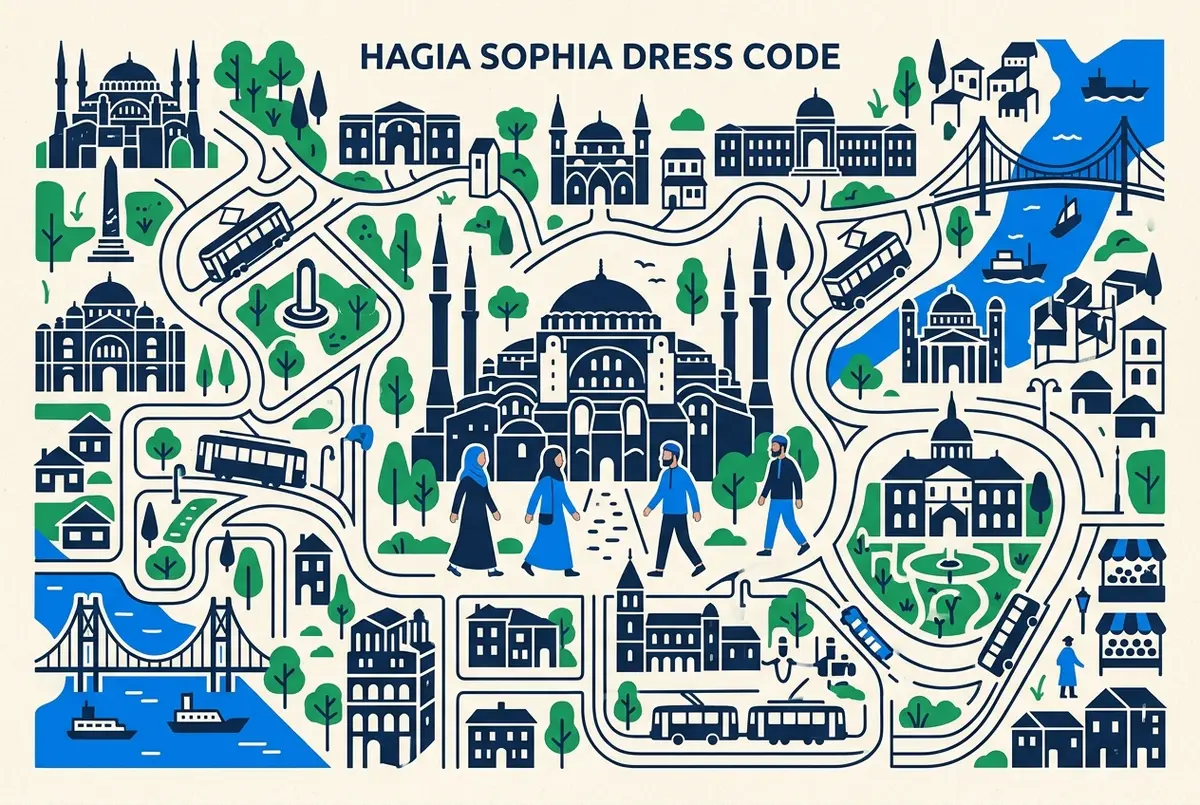
The Hagia Sophia dress code comes down to one rule: cover your shoulders and knees, and bring a headscarf if you’re a woman, because the building has operated as an active mosque since 2020. Getting this right before you arrive saves time at the gate on top of your Hagia Sophia ticket, since the entrance staff enforce it before you reach the mandatory security check.
 Ready to see prices? Hagia Sophia Skip-the-Line Ticket, from $37.93 See times
What Is the Dress Code for Visiting Hagia Sophia?
The core rule is shoulders and knees covered for every visitor, plus a headscarf for women, because Hagia Sophia has functioned as an active mosque since 2020.
Anadolu Agency confirms the 2020 reconversion that put Hagia Sophia back under religious administration for worship, which is why it now follows mosque dress standards rather than museum ones. Our Hagia Sophia skip-the-line ticket states this plainly in its own visiting guidance: modest dress is required, with shoulders and knees covered and a scarf for women to cover their hair.
This isn’t the first time the dress expectations here have flipped with the building’s status. After the 1453 conquest of Istanbul, Sultan Mehmed the Conqueror converted the church into a mosque, and the building only opened for secular visits once the Turkish Assembly of Ministers decided to do so on February 1, 1935, when museum rules briefly replaced mosque ones. Since 2020 it has swung back, and today the Ministry of Culture of the Republic of Turkiye supervises and supports the site under its current mosque status, so the shoulders-knees-headscarf rule above is the one that applies on your visit.
Do Women Need to Bring Their Own Headscarf?
Not strictly. Scarves are sold at the entrance, but the queue for them adds time, so packing a lightweight scarf is the faster option.
Picture a woman arriving at the entrance without a scarf: the queue for the paid scarves at the counter adds another 10 minutes before she even reaches the security line. Packing a lightweight scarf in her bag that morning would have skipped that line entirely, which is exactly the insider tip our skip-the-line ticket page gives: bring your own scarf if you’re visiting without a tour, since the ones sold at the entrance cost extra.
Want a closer look? Hagia Sophia Skip-the-Line Ticket, from $37.93 See timesCan You Wear Shorts or Sleeveless Tops to Hagia Sophia?
No. Shoulders and knees must be covered for every visitor regardless of gender, per the dress rule stated on our own Hagia Sophia ticket pages.
This isn’t a soft suggestion that gets waved through for tourists; our Hagia Sophia skip-the-line ticket lists it as a visiting requirement alongside the Friday prayer closure, not an optional courtesy. Bring a light layer, even in summer heat, since there is no exception at the door.
Do You Have to Remove Your Shoes Inside Hagia Sophia?
The ticketed visiting route covers the Upper Gallery, not the ground-floor prayer hall reserved for worship, so the usual mosque shoe-removal rule applies mainly to that prayer hall rather than the tourist walkway most visitors use.
Our Hagia Sophia skip-the-line ticket covers entry to the visiting area and Upper Gallery specifically, which is separate from the ground-floor area reserved for prayer. If you plan to step into any area used for active worship, treat the shoe-removal rule as standard mosque etiquette regardless of what the tourist route requires.
Ready to see prices? Hagia Sophia & Blue Mosque Tour with Ticket, Optional Cistern, from $16.50 See timesWhat Is the Security Check Like at the Entrance?
Every visitor, ticketed or not, passes through mandatory airport-style screening that can add up to 30 minutes in high season, and this site’s own tips recommend keeping bags small to move through faster.
Our Hagia Sophia skip-the-line ticket is explicit that this ticket skips the ticket-counter line only, not the security check, which serves the whole site and cannot be bypassed by any ticket type. Keep bags small, since larger bags add minutes at this checkpoint regardless of what you’re wearing.
When Hagia Sophia reopened as a mosque in 2020, admission was free for both domestic and foreign tourists, and Istanbul’s governor said at the time that the mosque would stay open for worship 24 hours a day from the reopening date, though the ticketed visiting hours for tourists follow their own schedule rather than that round-the-clock worship access. Inside, the Christian mosaics and frescoes are concealed by curtains during Muslim prayer times and remain on display otherwise, so your own modest dress is really matching the same respect the building extends to its own artwork at prayer time.
Want a closer look? Hagia Sophia Skip-the-Line Ticket, from $37.93 See timesIs the Dress Code Different at the Blue Mosque?
Essentially the same rules apply: shoulders and knees covered and a headscarf for women, since both buildings are active mosques, so one modest outfit and one scarf cover both stops on the same day.
Our Hagia Sophia and Blue Mosque guide walks through the Blue Mosque’s own rules in more detail, but the shoulders-knees-headscarf baseline carries over directly since both sit a short walk apart and operate under the same kind of worship rules.
| Rule | Hagia Sophia | Blue Mosque |
|---|---|---|
| Head covering | Required for women | Required for women |
| Shoulders and knees | Covered, all visitors | Covered, all visitors |
| Shoes | Mainly relevant inside the prayer hall, not the tourist Upper Gallery | Removed at the mosque entrance for the visitor section |
Hagia Sophia Dress Code: FAQ
Can men wear shorts in Hagia Sophia?
No. The shoulders-and-knees rule applies to every visitor regardless of gender, so men need knee-length or longer clothing just as women do.
Will Hagia Sophia security screen bags?
Yes. The mandatory security check applies to every visitor and every bag, and it is separate from any dress-code check at the entrance.
What happens if you arrive dressed inappropriately?
Our sources don’t confirm a specific turned-away policy, but entrance staff can require you to cover up before entry, and scarves are sold on site for exactly that situation.
Are children exempt from the Hagia Sophia dress code?
Our sources don’t confirm a specific exemption. Dressing children modestly as a precaution is the safer approach, since enforcement at the door isn’t guaranteed to be consistent.
I’d pack a lightweight scarf and a layer that covers your shoulders before you leave your hotel, since skipping the entrance queue for rental scarves saves more time than almost any other single prep step for a Hagia Sophia visit.
Ready to see prices? Hagia Sophia & Blue Mosque Tour with Ticket, Optional Cistern, from $16.50 See times