

Hagia Sophia mosaics are easy to read about in vague terms online, as if they were one undifferentiated patch of gold tile. They’re not: the Deesis mosaic, the Imperial Gate mosaic and the apse mosaic of the Virgin and Child sit in three distinct parts of the building, each from a different era, and knowing where to look turns a quick walk-through into something closer to a real visit. Hagia Sophia’s gallery ticket covers the Upper Gallery route where nearly all of this is visible.
 Ready to see prices? Hagia Sophia Skip-the-Line Ticket, from $37.93 See times
What Mosaics Can You See at Hagia Sophia?
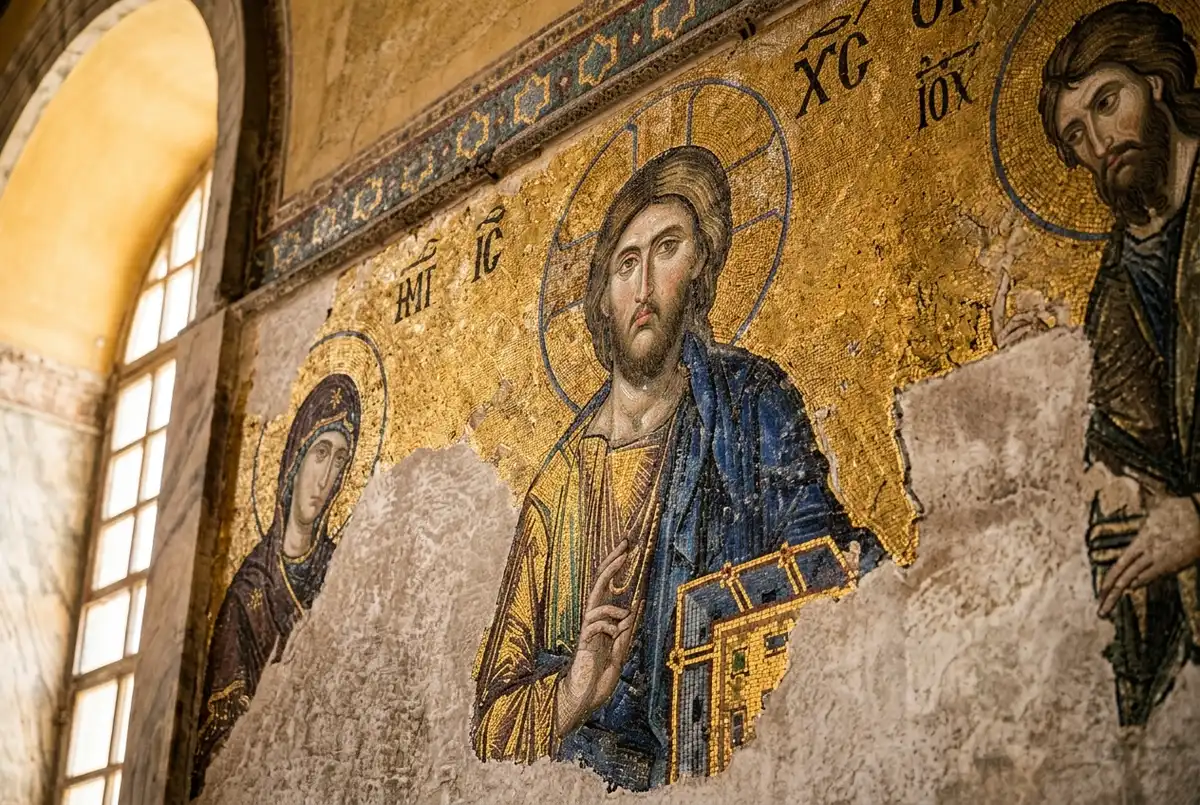
From the Upper Gallery, visitors can see the Deesis mosaic, the apse mosaic of the Virgin and Child, and surviving panels near the Imperial Gate, alongside later Ottoman calligraphy medallions layered over the same walls.
Most of Hagia Sophia’s figural mosaics, including the Deesis, were created in the 10th and 12th centuries, centuries after the building itself was completed. The route your skip-the-line ticket covers routes directly past each of these.
| Mosaic or feature | Location | Era | Covered by |
|---|---|---|---|
| Deesis mosaic | Upper Gallery | 10th-12th century | Skip-the-line ticket, all guided tours |
| Imperial Gate mosaic | Main entrance, exonarthex to esonarthex | 9th-10th century | All ground-floor routes |
| Apse mosaic, Virgin and Child | Semidome above the former altar | Restored after 994 | Skip-the-line ticket, all guided tours |
| Central dome | Nave ceiling | Rebuilt post-558 | Every ticket type |
Are the Hagia Sophia Mosaics Covered Now?
Figural mosaics in the Qiblah direction, including depictions of Mary, are curtained during the five daily prayers and uncovered the rest of the time.
Turkish presidential spokesman Ibrahim Kalin said mosaics of Mary and Gabriel that lie in the Qiblah direction would be covered with curtains during Muslim prayers, while mosaics of Jesus and other Christian figures, not in that direction, stay uncovered. Outside prayer times, Hagia Sophia is open to all visitors with every mosaic uncovered. Since the visiting area also closes from 12:00 to 14:00 on Fridays for prayer, that same window is when the curtains are drawn, so the two facts line up into one practical rule: avoid midday Fridays if the apse mosaic is the one thing you came to see.
Want a closer look? Hagia Sophia Skip-the-Line Ticket, from $37.93 See timesWhat Is the Deesis Mosaic?
It is a Christ Pantocrator image dated to Hagia Sophia’s wider wave of 10th to 12th century figural mosaics, found in the Upper Gallery where the skip-the-line and audio-guide tickets route visitors.
Most audio guides and live guides alike treat it as the gallery’s centerpiece, since it survives in better condition than many of the building’s other figural works.
Short on time? Hagia Sophia, Basilica Cistern & Blue Mosque Tickets with Audio, from $93.49 See timesWhat Is the Imperial Gate Mosaic?
It shows Emperor Leo VI kneeling before Christ, set above the Imperial Gate, the main entrance between the outer and inner narthex that medieval emperors once used to enter the nave.
Mosaics above the narthex and imperial gates, depicting Jesus, Mary and various Byzantine emperors, were covered over under Suleiman and later uncovered during restoration work, which is why this particular mosaic survives at all rather than being lost entirely.
Ready to see prices? Hagia Sophia & Blue Mosque Tour with Ticket, Optional Cistern, from $16.50 See timesCan You See the Virgin Mary and Child Mosaic?
Yes, in the apse, the semidome above where the altar once stood. It was covered with white drapes in 2020 and is revealed outside prayer times under the current curtain policy.
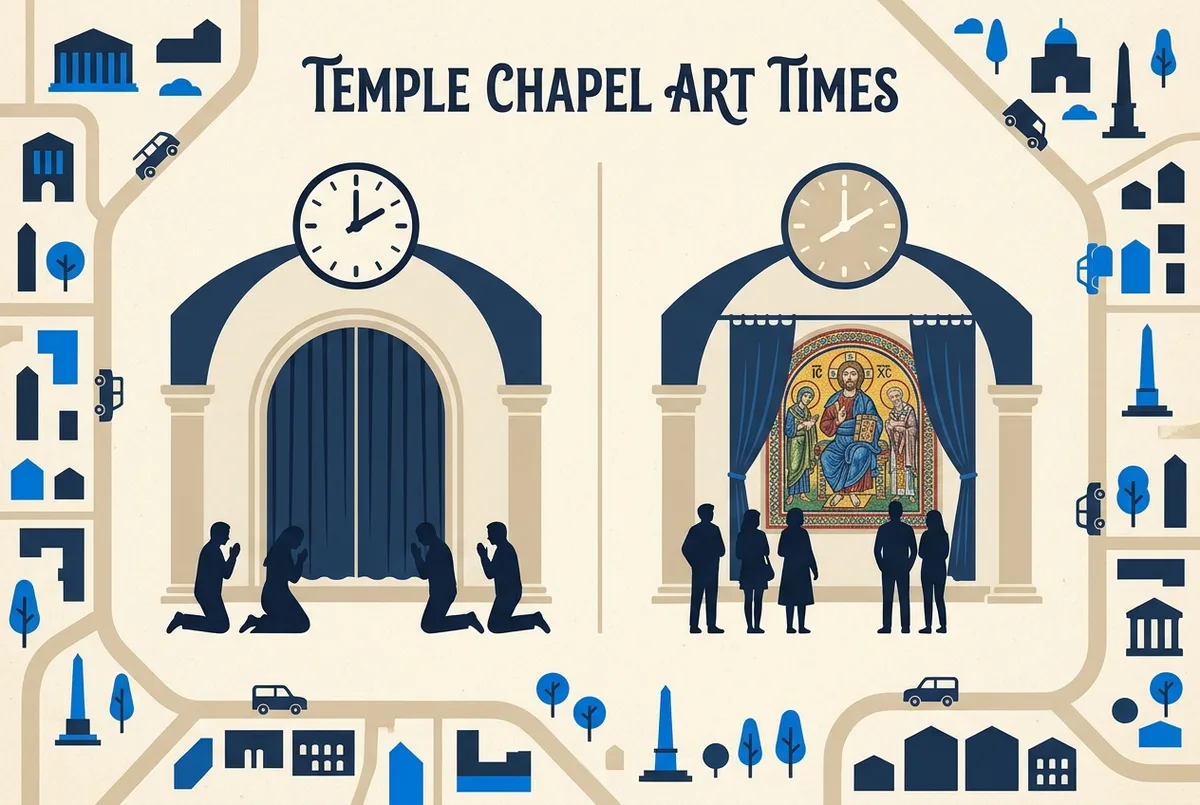
Picture a visitor timing their Upper Gallery walk around midday prayer without realizing it: they reach the apse mosaic right as the curtains close. Checking the day’s prayer schedule before heading up avoids spending the one shot at the Virgin and Child mosaic looking at drawn drapes instead of the artwork itself.
Want a closer look? Hagia Sophia Skip-the-Line Ticket, from $37.93 See timesWhat Is Special About the Hagia Sophia Dome?
The current dome, rebuilt after 6th-century earthquake damage, spans roughly 33 meters across and rises about 55.6 meters, a scale that made the building one of the largest enclosed interior spaces in the world when it was completed in 537.
The pendentive dome from the post-558 reconstruction has a diameter between 32.7 and 33.5 meters, with the interior height reaching 55.6 meters. The building was constructed 532 to 537 under Justinian I, designed by Isidore of Miletus and Anthemius of Tralles, and that dome is still the single feature every ticket type, guided or self-guided, centers the visit around.
Short on time? Hagia Sophia, Basilica Cistern & Blue Mosque Tickets with Audio, from $93.49 See timesFAQ
Why are some Hagia Sophia mosaics only partly visible?
Figural mosaics in the Qiblah direction are curtained during the five daily prayers to avoid depicting figures during worship, then uncovered again once prayers finish.
Do you need the Upper Gallery ticket to see the mosaics?
Yes. The Deesis mosaic, the apse mosaic and most of the Imperial Gate mosaic sit on the Upper Gallery route that every standard ticket covers.
What are the Ottoman calligraphy medallions next to the mosaics?
They are large circular Islamic calligraphy panels added after the building’s conversion to a mosque, hung alongside the surviving Byzantine mosaics rather than replacing them.
How many columns does Hagia Sophia have?
The building’s full column count spans multiple levels and eras; check Hagia Sophia’s history for how the structure evolved across its reconstructions.
If I’m walking the gallery myself, I’d check the day’s prayer schedule first and time my visit around it, so the apse mosaic isn’t hidden behind a curtain when I get there. For the honest verdict on whether the whole trip is worth it, see is Hagia Sophia worth visiting, and for how long to budget for this exact walk, see how long a Hagia Sophia visit takes. Timing your visit around the best time to visit Hagia Sophia also helps you see these mosaics without a crowd in front of them, and if mobility affects your plan, check Hagia Sophia’s wheelchair accessibility first.
Ready to see prices? Hagia Sophia & Blue Mosque Tour with Ticket, Optional Cistern, from $16.50 See times